
Creating a financial decision checklist for Smarter Money Choices
Table of Contents
Learn how to create a financial decision checklist to evaluate major money choices, avoid costly mistakes, and make smarter financial decisions with confidence.
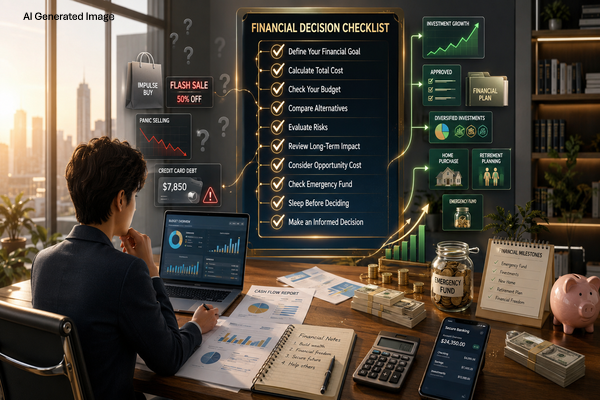
Have you ever signed up for something, paid for something, or invested in something, and then thought “why didn’t I wait one more day before saying yes”?
If yes, you are not alone. Almost every adult in India has a story like this. A loan taken in a hurry. A phone upgraded on impulse. A stock bought because a friend said it was “going to explode.”
Here is the truth nobody tells you. Most money mistakes have nothing to do with intelligence. They happen because decisions get made under pressure, emotion or half information. That is exactly why you need a financial decision checklist. It is a simple habit that forces you to pause, think and check before your money leaves your hand.
This guide gives you a complete, easy to follow financial decision checklist you can use for everything from a weekend shopping trip to a home loan.
Why a Financial Decision Checklist Actually Works
Pilots run through a checklist before every takeoff. Doctors follow one before surgery. Seasoned investors stick to a process instead of chasing tips. Structure beats emotion, every time.
Your money deserves the same discipline. A financial decision checklist helps you
- Catch emotional or impulse spending before it happens
- Spot hidden charges buried in the fine print
- Compare products or options with a clear head
- Lower financial stress and decision fatigue
- Protect long term goals like retirement, a house or your child’s education
- Back every rupee you spend with logic, not mood
Once this becomes a habit, “can I afford this” turns into a much smarter question, “should I do this.”
When Should You Actually Use It?
You do not need to overthink a cup of coffee or a grocery run. A financial decision checklist earns its place when real money or a long commitment is involved, such as
- Buying a home or a vehicle
- Taking a personal loan or credit card EMI
- Investing in mutual funds, SIPs or stocks
- Starting a side business
- Switching jobs or taking a career break
- Buying insurance or a big ticket gadget
- Putting money into crypto or a “hot” investment tip
If a decision can shape your finances for months or years, slow down first.
The Financial Decision Checklist
1. Need or Want?
Needs protect your life and responsibilities such as rent, medical bills, education and basic transport. Wants add comfort, like a premium phone or a fancy vacation. Wants are not wrong, they just need to fit your budget, not your mood.
2. Does It Match My Financial Goals?
Every rupee spent is a small vote for or against your future. Before paying, ask if this pulls you closer to your goals, an emergency fund, a home down payment, debt freedom, or your child’s future, or if it quietly pushes those goals further away.
3. Can I Genuinely Afford It?
Being able to pay does not always mean you can afford it. Check if your emergency fund stays intact and you can still handle a surprise expense next month.
4. What Is the Real, Total Cost?
The sticker price is rarely the full price. A car brings insurance, fuel, servicing and depreciation. A home brings stamp duty, registration, property tax, maintenance and furnishing. Always calculate lifetime cost, not just the invoice.
5. Am I Deciding With Emotion?
Big purchases made while excited, anxious, lonely or under pressure usually cost more than planned. Countdown timers and “only 2 left” banners are designed to rush you. Sleep on it whenever you can. A good decision survives a good night’s sleep.
6. Have I Compared My Options?
The first offer is rarely the best one. Compare price, interest rate, features, reviews, warranty and exit charges. An extra hour of research can save you thousands over the years.
7. What Is the Worst That Could Happen?
Picture the toughest realistic outcome. A job loss, a rate hike, a market fall of 30 percent, or a medical emergency. If your finances can absorb that shock and still stand, the decision is likely a sound one.
8. Good Debt or Bad Debt?
Good debt builds an asset or your future earning power, think education loans or a home loan you can comfortably repay. Bad debt usually funds consumption, unpaid credit card dues, or a “buy now pay later” splurge on things you did not need.
9. What Am I Giving Up Instead?
Every rupee spent on one thing is a rupee not invested and not saved. Before spending big, ask what else that same amount could do for you over five or ten years.
10. Have I Actually Read the Fine Print?
Never sign anything without reading it fully. Watch for processing fees, lock in periods, exit loads, penalty clauses and renewal terms. Expensive surprises almost always hide in the details nobody reads.
11. Have I Asked Someone I Trust?
A second opinion from your spouse, a level headed family member or a SEBI registered investment adviser often reveals a blind spot you missed. This is not about seeking permission, it is about gaining perspective.
12. Will Future Me Thank Present Me?
Picture yourself a year from now looking back at this decision. Would you feel proud and relieved, or would you feel regret? If you are not sure, that uncertainty is your answer. Wait.
The One Page Financial Decision Checklist
Question Yes No
Is this truly necessary? ☐ ☐
Does it support my financial goals? ☐ ☐
Can I comfortably afford it? ☐ ☐
Have I compared other options? ☐ ☐
Do I understand the full cost? ☐ ☐
Am I avoiding an emotional decision? ☐ ☐
Do I understand the risks involved? ☐ ☐
Have I read the terms carefully? ☐ ☐
Will future me thank present me? ☐ ☐
If more than a couple of answers land on “No,” pause the decision and gather more information first.
Common Mistakes People Make Even With a Checklist
Buying because everyone else is. Social pressure drains bank accounts faster than genuine need ever does.
Ignoring small recurring costs. OTT subscriptions, app renewals and maintenance fees quietly stack up every month.
Calling something “an investment” with no proof. Not everything that looks like it will appreciate actually does. Check the numbers first.
Chasing quick returns. Any scheme promising huge profit with little or no risk deserves extra scrutiny, not extra excitement.
Deciding under pressure. Aggressive sales pitches work best on rushed minds. Give yourself room to think.
Make the Checklist a Habit
Save this financial decision checklist on your phone. Pull it out before any major purchase, loan or investment. Revisit shared decisions with your partner or family. Update it as your goals change with time, and resist the temptation to skip a step just because you are excited.
Final Thoughts
Financial success rarely comes down to one perfect call. It comes from making steady, thoughtful choices year after year. A solid financial decision checklist replaces impulse with intention, protects your goals and keeps regret out of the picture.
The smartest financial decision is not always the one with the biggest reward. It is the one that fits your budget, matches your goals and leaves you standing stronger a year from today.
FAQs
What is a financial decision checklist?
A financial decision checklist is a structured set of questions that helps you evaluate major money decisions before spending, borrowing, or investing. It encourages careful thinking and reduces the influence of emotions.
Why is a financial decision checklist important?
It helps minimize costly mistakes, uncovers hidden costs, keeps your decisions aligned with your financial goals, and promotes more confident, well-informed choices.
When should I use a financial decision checklist?
Use it for significant financial commitments such as buying a home or car, taking a loan, investing, starting a business, choosing insurance, or making any purchase that could affect your finances for months or years.
Can a financial decision checklist guarantee good outcomes?
No. A checklist cannot eliminate risk or guarantee success, but it can improve the quality of your decision-making by helping you consider important factors before acting.
How often should I update my financial decision checklist?
Review it whenever your financial goals, income, family situation, or risk tolerance changes. Keeping it current ensures it continues to support your long-term financial objectives.
Disclaimer
This article is for educational and informational purposes only and should not be considered financial, investment, tax, or legal advice. Please consult a qualified financial advisor before making any financial decisions.