
10 Money Mistakes to Avoid in Your 20s and 30s
Table of Contents
Let’s talk about the 10 biggest money mistakes people make in their 20s and 30s, and more importantly, how you can sidestep them completely.
Let me be honest with you. Your 20s and 30s aren’t just about finding yourself or building a career. These decades are your financial foundation years. Everything you do with money right now will echo through the rest of your life sometimes for better, often for worse.
I have watched countless friends, colleagues, and clients make the same money mistakes during these crucial years. Smart people. Hardworking people. People who thought they were doing everything right. The problem .Nobody taught them what right actually looks like when it comes to managing money in your 20s and 30s.
Here’s what I have learned: financial mistakes in your 20s and 30s aren’t about being irresponsible. They’re about not knowing what you don’t know. Once you understand these common pitfalls, avoiding them becomes second nature.
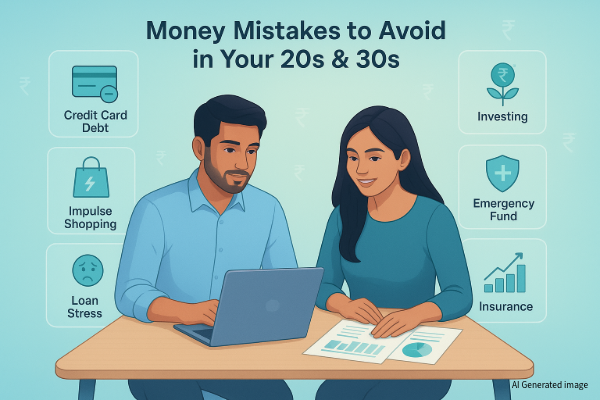
1. Thinking You Have Time to Start Investing Later
This money mistake costs more than all the others combined.
I hear it constantly. i will start investing once I am settled or After I buy a house, then I will focus on investments or my personal favorite, I am too young to worry about retirement.
Here is the brutal truth about delaying investing. time is your biggest asset when you are in your 20s and 30s, and you are literally throwing it away.
Let me paint you a picture. Person A starts investing ₹3,000 monthly at age 25. Person B waits until 35 and invests ₹15,000 monthly five times more. Despite investing significantly less money, Person A ends up wealthier because of those extra ten years.
This is compounding in action, and it’s the closest thing to magic in personal finance. But here is the catch. compounding needs time. Every single year you delay is a year the market can never give back to you.
The fix. Start today with whatever you have. Whether it’s ₹1,000 or ₹10,000, get that money working for you. Index funds, mutual funds, ETFs pick any vehicle and begin. Consistency beats amount every single time when you are avoiding money mistakes in your 20s and 30s.
2. Spending Money to Keep Up Appearances
Social media has turned lifestyle comparison into a full time spectator sport. Your college friend is in Bali. Your coworker just bought the latest iPhone. Your cousin is posting pictures from yet another fancy restaurant.
Suddenly, your perfectly good phone feels outdated. Your weekend plans seem boring. Your wardrobe looks cheap.
This money mistake is insidious because it doesn’t feel like a mistake. It feels like living your life. But here is what’s really happening. you are funding someone else’s Instagram feed with your future financial security.
Living beyond your means in your 20s and 30s creates a debt trap that’s incredibly hard to escape. Credit cards max out. Personal loans pile up. And before you know it, you’re working just to service debt, not to build wealth.
The reality check. Most people showing off expensive lifestyles are either earning significantly more than you, drowning in debt, or both. Your financial decisions should reflect your income and goals not what looks good on social media.
A practical rule that’s saved many from this money mistake. save or invest at least 20-30% of your income first, then enjoy the rest guilt free. This way, you’re living well today without stealing from your tomorrow.
3. Skipping the Emergency Fund
I know, I know. Emergency funds sound boring. They’re not sexy. They don’t generate exciting returns. They just sit there doing nothing.
Until everything hits the fan.
Job loss. Medical emergency. Family crisis. Car breakdown. Unexpected relocation. These situations don’t schedule appointments. They don’t wait until you are financially ready. They just happen.
Without emergency savings, you are one crisis away from derailing years of financial progress. Most people in their 20s and 30s think it won’t happen to them until it does.
Here is what typically happens. emergency strikes, savings don’t exist, credit cards come out, interest piles up, and a temporary problem becomes permanent financial damage. This money mistake in your 20s and 30s can set you back by years.
The solution. Build an emergency fund covering at least six months of expenses. Keep it in a savings account or liquid fund where you can access it immediately. Yes, it’s boring. Yes, it’s necessary. Yes, avoiding this money mistake might be the smartest financial decision you make in your 20s and 30s.
4. Treating Credit Cards Like Bonus Salary
Credit cards are incredible financial tools when used correctly. The problem. Most people in their 20s and 30s use them completely wrong.
Here is how the money mistake unfolds. credit card arrives, credit limit feels like free money, spending increases, bill arrives, minimum payment seems manageable, interest starts accumulating, debt spirals.
A ₹50,000 credit card debt can balloon to over ₹1 lakh within a few years if you’re only paying minimum dues. The interest rates on credit cards are brutal usually 36-42% annually.
The smart approach. Use credit cards for convenience and rewards, never for funding a lifestyle you can’t actually afford. The golden rule. if you can’t pay the full amount when the bill arrives, you couldn’t afford the purchase in the first place.
This money mistake in your 20s and 30s is completely avoidable with one simple habit. always pay your entire credit card bill every month. No exceptions.
5. Thinking Insurance Can Wait
I am young and healthy. Why do I need insurance?”
This thinking is one of the most dangerous money mistakes people make in their 20s and 30s. Health emergencies don’t discriminate by age. Accidents don’t check your bank balance before happening.
One major medical crisis can destroy years of savings. I have seen it happen repeatedly. Someone spends their entire 20s building a nest egg, then loses it all to a single hospitalization because they didn’t have adequate health insurance.
Another common variation of this money mistake. relying entirely on employer provided insurance. Jobs change. Companies downsize. Health issues don’t wait.
What you actually need:
- Personal health insurance covering at least ₹10-15 lakh
- Term life insurance if anyone depends on your income
Insurance isn’t an investment. It’s not meant to give returns. It’s income protection, pure and simple. Missing this in your 20s and 30s is a money mistake that can haunt you for life.
6. Having No Idea Where Your Money Goes
Quick question:
how much did you spend last month on food delivery, Subscriptions, Cab rides and Coffee?
If you are guessing, you are making one of the most common money mistakes in your 20s and 30s.
Small expenses are financial termites. Individually, they seem harmless. A ₹300 food delivery here, a ₹500 cab ride there, another ₹400 on a subscription you forgot about. But together. They silently destroy your ability to save and invest.
The wake up call: Track your expenses for just three months. Use an app, a spreadsheet, or even a notebook. You will be shocked at where your money actually goes versus where you think it goes.
Once you see the patterns, controlling spending becomes dramatically easier. This simple step helps you avoid a money mistake that quietly drains thousands every month during your 20s and 30s.
7. Loading Up on Big Loans Too Soon
Home loans, car loans, personal loans borrowing feels normal in your 20s and 30s. Everyone’s doing it, right?
The money mistake isn’t borrowing itself. It’s borrowing too much, too early, before your income stabilizes.
When your EMIs consume 50-60% of your salary, you are not building wealth. You are trapped in a cycle where you work to pay banks. High EMIs kill your ability to save, invest, and handle emergencies.
I have seen too many people in their late 20s and early 30s stressed, stuck, and unable to make financial progress because they committed to massive loans based on today’s salary, not considering tomorrow’s uncertainties.
The better approach: Keep total EMIs below 30-35% of monthly income. Before taking any major loan, ask yourself. Can I handle this comfortably even if my income drops slightly. If the answer is no, you are setting yourself up for one of the most painful money mistakes of your 20s and 30s.
8. Confusing Salary Hikes With Wealth Building
Your salary increased by 20%. Congratulations. Now here is the money mistake. increasing your spending by 20% too.
Income growth doesn’t equal wealth creation. Wealth grows when your money works for you through consistent saving and smart investing, not when you upgrade to a fancier apartment or pricier car with every raise.
Many high earners in their 30s remain financially stressed because their lifestyle expenses pace their income growth. They make more but save less. They earn more but own less.
The wealth building secret. Every time your salary increases, increase your investments proportionally. Got a 15% raise. Increase your SIPs by 15%. This ensures your future benefits from your present success, helping you avoid a subtle but devastating money mistake common in your 20s and 30s.
9. Drifting Through Life Without Financial Goals
Without clear financial goals, every spending decision becomes reactive. You handle bills as they come, spend on whatever feels important in the moment, and hope something’s left over to save.
This scattered approach is a money mistake that prevents people in their 20s and 30s from ever gaining real financial momentum.
Think about it. you are working hard, earning money, spending money, but toward what exactly. Retirement is too far away to feel real. Wealth is too vague to work toward.
The clarity you need. Define specific goals with actual numbers and timelines. Buying a home by 32. ₹50 lakhs for children’s education by 2035. Building a ₹2 crore retirement corpus by 50. Starting a business in five years.
Break these into short-term (1-3 years), medium-term (3-7 years), and long-term (10 plus years) categories. Suddenly, your money has direction. Your investments have purpose. You are avoiding one of the most common money mistakes of your 20s and 30s. drifting aimlessly through your peak earning years.
10. Going It Alone Instead of Getting Professional Help
Google is free. Financial advice from friends is free. YouTube videos about money are free.
You know what’s expensive. Following random advice not tailored to your specific situation.
This money mistake in your 20s and 30s is becoming increasingly common. People research endlessly online, absorb conflicting advice, and then either do nothing or make decisions that don’t align with their actual financial situation.
Tax planning gets complicated. Asset allocation requires expertise. Insurance structuring isn’t one size fits all. As your income grows, so does the complexity of managing it well.
The smart investment: Consult a certified financial planner who understands your life stage, income level, family responsibilities, and risk tolerance. A single well structured financial plan can save you from years of costly money mistakes in your 20s and 30s.
Your 20s and 30s: The Financial Foundation Years
Avoiding money mistakes in your 20s and 30s isn’t about being perfect with every rupee. It’s about awareness, intentionality, and building habits that compound positively over time.
Every money mistake outlined here is completely avoidable once you know what to watch for. Start investing early. Live within your means. Build emergency savings. Use credit wisely. Get adequate insurance. Track spending. Borrow responsibly. Grow wealth, not just income. Set clear goals. Seek professional guidance.
These aren’t complicated strategies. They are straightforward principles that, when followed consistently during your 20s and 30s, create financial security that lasts a lifetime.
The choices you make with money today will determine your options tomorrow. Make them count.
FAQs
What is the biggest financial mistake young adults make?
The biggest financial mistake is delaying investments. Starting early allows your money to grow through compounding, which becomes extremely powerful over time.
How much should I save or invest from my salary every month?
Is it okay to use credit cards regularly in your 20s?
Yes, but only if you pay the full amount every month. Carrying forward balances leads to high interest debt and damages your credit score.
Do I really need health and life insurance at a young age?
Absolutely. Medical emergencies and uncertainties don’t depend on age. Buying insurance early keeps premiums low and protects your savings.
Should I clear all my loans before starting investments?
Not always. High interest loans should be cleared first, but low interest loans like home or education loans can be managed alongside disciplined investing.