
Signs Your Financial Plan Needs an Immediate Review
Table of Contents
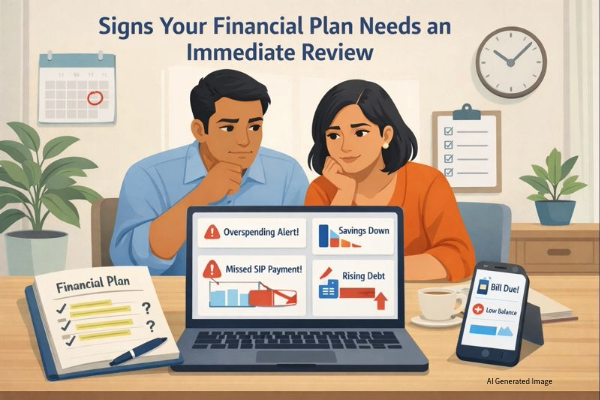
Let me share something most people don’t realize. creating a financial plan isn’t where the journey ends. it’s actually where it begins.
I have seen countless individuals treat their financial plans like old photo albums, tucked away somewhere safe and rarely revisited. They create these comprehensive documents with the best intentions, then life happens, and the plan slowly becomes irrelevant. Before they know it, they are making financial decisions based on outdated assumptions that no longer match their reality.
Here’s the uncomfortable truth. An outdated financial plan can actually hurt you more than having no plan at all. Why? Because it gives you a false sense of security while quietly steering you away from your goals.
Think about it. Markets shift. Your income changes. Your family grows. Your priorities evolve. If your financial plan doesn’t evolve with these changes, you are essentially driving with an old map in unfamiliar territory.
So how do you know when it’s time to pull out that financial plan and give it a thorough review. Let me walk you through the warning signs that should trigger an immediate financial plan review.
1. Your Income Has Changed (Up or Down)
Income changes are probably the biggest trigger for needing a financial plan review, yet people often overlook this simple fact.
Maybe you have received that long-awaited promotion and your salary jumped by 30%. Congratulations! But are you still investing the same amount as before? Are your savings targets still appropriate for your new income level?
Or perhaps you have switched careers, started freelancing, or launched a side business. These changes don’t just affect how much you earn they fundamentally change how and when money flows into your bank account.
On the flip side, maybe your income has decreased. Perhaps your company downsized, or your business hit a rough patch. Your old financial plan, built around your previous income, simply won’t work anymore.
Here’s what happens when you ignore income changes. If you are earning more but still following your old plan, you are probably missing opportunities to accelerate your goals or build wealth faster. If you are earning less but haven’t adjusted your plan, you are likely accumulating debt or burning through savings both dangerous situations.
The fix? Whenever your income changes by 20% or more (in either direction), treat it as an automatic trigger for a comprehensive financial plan review. Recalculate your budget, reassess your investment contributions, and realign your timeline for achieving financial goals.
2. You Are Living Paycheque to Paycheque
This one hits close to home for many people, and I want you to know there’s no judgment here. Living pay cheque to pay cheque can happen to anyone even those with decent incomes.
The warning signs are usually pretty clear. You find yourself checking your bank balance multiple times a week. That week before payday fills you with anxiety. You are using credit cards not for rewards or convenience, but because there’s genuinely no money left in your account for groceries or fuel.
You keep telling yourself, “Next month will be better,” but next month comes and the same pattern repeats.
This situation screams for a financial plan review because something fundamental has shifted. Either your expenses have crept up without you noticing, or your income hasn’t kept pace with inflation and lifestyle changes, or both.
The most dangerous part? When you are living pay cheque to pay cheque, there’s no buffer. One unexpected car repair, one medical bill, one appliance breaking down and you are in debt. That’s not a financial plan. that’s a financial tightrope.
A proper financial plan review will help you identify where your money is actually going, highlight the leaks in your budget, and create a realistic path to building breathing room in your finances.
3. Your Savings Rate Has Dropped
Remember when you used to effortlessly set aside money every month? Your SIPs ran automatically, your emergency fund steadily grew, and you felt good about your financial progress.
But lately, things have changed. Those SIPs feel like a burden. You have paused a few investment contributions “temporarily.” Savings only happen when there’s money left over which is rarely.
A declining savings rate is like a fever it’s not the disease itself, but a symptom telling you something’s wrong. And just like you wouldn’t ignore a persistent fever, you shouldn’t ignore a falling savings rate.
Here’s a useful benchmark. if you are saving less than 20% of your monthly income without a clear, justified reason (like a temporary emergency or planned large expense), your financial plan needs immediate attention.
The earlier you saved consistently because your plan allocated money properly. If that’s not happening now, either your income has decreased, your expenses have inflated, or your financial discipline has slipped. A financial plan review will pinpoint the exact issue and help you course-correct before you fall further behind on your goals.
4. You Don't Have an Emergency Fund (or It's Inadequate)
Let’s talk about emergency funds the financial safety net everyone needs but many people skip.
An adequate emergency fund should cover 3 to 6 months of your essential expenses. Not your full lifestyle expenses, mind you, but the absolute essentials: rent or EMI, groceries, utilities, insurance premiums, and basic transportation.
If you don’t have this cushion, or if you dipped into your emergency fund last year and never rebuilt it, you are operating without a safety net. One job loss, one medical emergency, one major home repair and your entire financial life could unravel.
I have seen people rely on credit cards as their “emergency fund,” which is essentially planning to go into debt during tough times. That’s not a strategy. that’s a recipe for financial stress.
Your emergency fund is the foundation of every solid financial plan. If this foundation is cracked or missing entirely, everything else is at risk. A financial plan review will help you prioritize building or rebuilding this crucial safety net before you focus on anything else.
5. You've Taken On New Loans or Debt
Debt fundamentally changes your financial landscape. Every rupee you commit to loan repayment is a rupee that can’t go toward savings, investments, or other goals.
Maybe you have bought your dream home and taken on a home loan. Perhaps you financed a car purchase, consolidated some old debts with a personal loan, or let your credit card balances grow larger than you intended.
Here’s the thing. if your current financial plan was created before you took on this debt, it’s already obsolete. The plan doesn’t account for these new obligations, which means your cash flow analysis is wrong, your risk capacity has changed, and your investment strategy might no longer be appropriate.
For example, if you are paying a 12% interest rate on a personal loan but your investments are targeting 10% returns, you are actually losing money. A financial plan review would catch this mismatch and help you prioritize debt repayment.
Additionally, debt changes how much risk you can afford to take with investments. With significant loan obligations, you need more stability and liquidity in your portfolio, not aggressive growth strategies.
Don’t wait if you have taken on any substantial debt since your last financial plan review, schedule one immediately.
6. Major Life Events Have Happened
Life events don’t just change your circumstances they completely reshape your financial priorities and responsibilities.
Getting married means combining finances, aligning goals with a partner, and planning for a shared future. Having a child introduces new expenses, insurance needs, and long-term goals like education planning. Buying a house shifts you from renter to owner, with all the financial implications that brings.
Then there are the difficult life events. Losing a job requires immediate financial triage. A serious medical emergency can deplete savings and highlight gaps in your insurance coverage. The death of a family member might bring unexpected financial responsibilities or inheritance considerations.
Each of these events happy or sad demands a complete financial plan review. Your old plan was built for your old life. Your new reality requires a new roadmap.
I have seen too many people try to force their old financial plan to fit their new circumstances. It doesn’t work. It’s like trying to use a bachelor’s budget when you have three kids the numbers simply don’t add up anymore.
7. Your Goals Have Changed (Even Slightly)
Financial plans exist to help you achieve your goals. But what happens when those goals shift?
Maybe you previously dreamed of early retirement at 45, but now you have found work you love and want to continue longer. Perhaps you once prioritized aggressive wealth accumulation, but recent world events have made you value security and stability more. You might have planned to stay in a big city, but now you are considering moving back to your hometown for a slower pace of life.
These aren’t failures or mistakes they are natural evolutions in how we think about our lives. The problem comes when our investments and financial strategies still reflect our old goals.
If you are investing aggressively for early retirement you no longer want, or keeping everything ultra-conservative when you have actually decided you can take more risk for better returns, there’s a mismatch that needs fixing.
Even small goal adjustments can require significant financial changes. A financial plan review ensures your money is working toward what you actually want now, not what you wanted five years ago.
8. Your Investments Feel Confusing or Unmanageable
Confusion is a red flag. If you can’t clearly explain why you own each investment in your portfolio, something’s wrong.
Maybe you have seventeen different mutual funds and you are not sure why. Perhaps you bought several insurance policies over the years and you have lost track of what they actually cover. Maybe market volatility makes you anxious because you don’t understand your investment strategy or whether your portfolio matches your risk tolerance.
A good financial plan should bring clarity, confidence, and peace of mind. If you are feeling confused, overwhelmed, or anxious about your investments, it’s time for a comprehensive financial plan review.
This review should simplify your portfolio, eliminate redundant holdings, ensure your asset allocation matches your goals, and give you a clear understanding of your complete financial picture.
Remember, complexity isn’t sophistication. The best financial plans are usually straightforward enough that you can explain them to a friend over coffee.
9. You Haven't Reviewed Your Plan in Over a Year
Here’s a simple rule. even if everything seems fine, your financial plan needs at least an annual review.
Why? Because the world doesn’t stand still. Tax laws change and these changes might create new opportunities or close old loopholes. Inflation erodes purchasing power, which means your savings targets from three years ago might not be sufficient anymore. Market returns vary, which affects how close (or far) you are from your goals. Your own circumstances evolve in small ways you might not immediately notice.
Think of your annual financial plan review like a yearly health checkup. You don’t wait until you are sick to see a doctor. you go for preventive care. Similarly, don’t wait for a financial emergency to review your plan.
An annual review keeps you on track, helps you catch small issues before they become big problems, and ensures you are taking advantage of any new opportunities that have emerged.
10. You Feel Constantly Stressed About Money
This is perhaps the most important sign, yet people often dismiss it.
If money causes regular anxiety, keeps you up at night, triggers arguments with your partner, or fills you with dread when you think about the future your financial plan isn’t working.
Yes, money can be stressful sometimes, especially during major life changes or genuine emergencies. But constant, ongoing financial stress indicates something is fundamentally wrong with your financial setup.
A proper financial plan should do the opposite. It should give you confidence that you are on the right track, peace of mind that you are prepared for emergencies, and clarity about your financial future.
If you are not feeling these things, you need a financial plan review immediately. Life’s too short to spend it constantly worried about money when proper planning could eliminate much of that stress.
How Often Should You Review Your Financial Plan?
Let me give you some practical guidelines:
Minimum once per year: Even if nothing major has changed, schedule an annual review. Think of it as your financial tune-up.
After any major life change: Marriage, divorce, birth, death, job change, home purchase these all trigger immediate review needs.
When goals shift: Anytime your priorities or life direction changes significantly.
During market volatility if goals are near: If you are within 2-3 years of a major goal and markets are swinging wildly, check your plan.
Regular financial plan reviews keep you in control. They prevent small issues from becoming major problems. They help you adapt to changes instead of being blindsided by them.
Final Thoughts
Your financial plan is a living, breathing document. It should grow and adapt as your life changes. Treating it like a static, one-time exercise is one of the biggest mistakes you can make with your finances.
Look back at the ten signs I have outlined. If even two or three of them resonate with your current situation, don’t put this off. Schedule a comprehensive financial plan review now not next month, not after the holidays, not when things calm down. Now.
The cost of delaying a needed financial plan review is always higher than the cost of doing it promptly. An outdated plan quietly accumulates opportunity costs, increases risks you are unaware of, and slowly pushes your goals further out of reach.
The best time to fix your financial plan is before things go seriously wrong, not after. Take action today, realign your finances, and regain the confidence and control that comes from having a plan that actually matches your life.
Your future self will thank you for it.
FAQs
How do I know if my financial plan needs a review?
If your income, expenses, goals, or family situation have changed or if you feel stressed or confused about money it’s a clear sign your financial plan needs a review. Even without major changes, reviewing your plan once a year is important.
How often should a financial plan be reviewed?
Is a financial review necessary if my income hasn’t changed?
What happens if I don’t review my financial plan regularly?
Does market volatility mean I should change my financial plan?
Can I review my financial plan on my own?
Basic reviews like tracking expenses, checking savings, and reviewing goals can be done on your own. However, for complex situations involving taxes, investments, or multiple goals, professional guidance can be helpful.