
Financial Planning Lessons from a Real Medical Emergency
Table of Contents
Learn essential financial planning lessons from a real medical emergency. Discover how to prepare for a healthcare costs, build emergency funds, and protect your family’s finances during health crises.
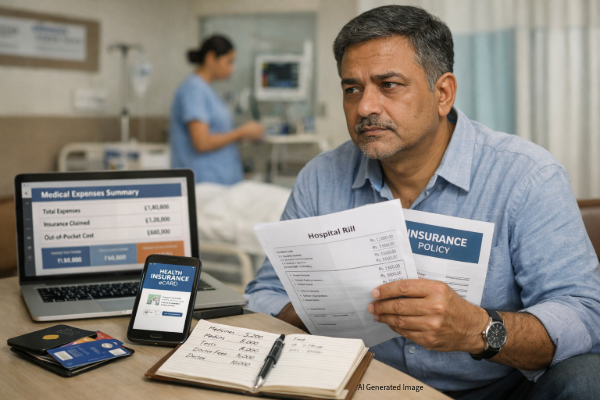
You know what’s funny about financial planning? Most of us think it’s all about retirement corpus, tax-saving instruments, or maybe building that dream portfolio. We attend webinars, read articles, compare mutual fund returns. All perfectly normal stuff. But here’s the thing nobody tells you. you don’t truly understand financial planning until life punches you in the gut.
I’m talking about a real medical emergency. The kind that happens at 2 AM. The kind where you are standing in a hospital corridor, and the doctor is explaining treatment options while someone at the billing counter is asking for advance payment. That’s when your financial plan gets its real test.
Over my years as a financial advisor, I’ve watched too many families, people who were doing “well” financially, completely fall apart during a health crisis. And no, it wasn’t because they didn’t have money. It was because they didn’t have the right kind of preparation. Their money was there, just not where they could reach it when every second counted.
This article isn’t your typical financial planning guide. These are hard-earned lessons that come straight from real medical emergencies. The kind of wisdom you can’t get from textbooks, but you absolutely need before life decides to test you.
1. Medical Emergencies Don't Give Advance Notice
Let me paint you a picture. It’s a regular Tuesday evening. You’ve just finished dinner, maybe watched some TV. Everything’s normal. Then suddenly a severe chest pain, a bad accident, a stroke. Within hours, your entire world has changed.
And you know what doesn’t wait during this chaos?
Hospital bills.
They don’t wait for your salary credit on the 1st. They don’t care that your fixed deposit matures next month. That SIP you’ve been religiously investing in for three years? Great for the long term, but right now the ICU needs ₹50,000 as admission deposit.
The admission happens overnight. Tests start immediately. ICU charges begin ticking like a meter. Medicines, doctor consultation fees, diagnostic procedures—the bills pile up faster than you can process what’s happening.
Here’s the brutal lesson: Liquidity matters infinitely more than returns when you are facing a medical emergency.
You might have a beautiful portfolio worth ₹15 lakhs. But if it’s locked in real estate, ELSS funds, or PPF, you can’t touch it. Not when you need it most. I’ve seen people with substantial net worth scrambling to arrange ₹2 lakhs because everything they owned was illiquid.
What you need to do right now:
Build an emergency fund that equals six to nine months of your family’s expenses. Not five months. Not “I’ll do it next year.” Do it now. Keep this money in places you can access instantly savings accounts, sweep-in fixed deposits, or liquid mutual funds. This isn’t money you are trying to grow. This is money that’s supposed to save you from drowning.
2. Health Insurance Is Not Optional — It's Foundational
I need you to understand something. Health insurance isn’t a “nice to have” financial product. It’s not something you buy because your friend bought it or because you got a discount during some sale. It’s the foundation everything else stands on.
The families that suffer the most during medical emergencies usually fall into one of these categories:
They have no health insurance at all (yes, this still happens)
Their coverage is pathetically inadequate
The policy is full of sub-limits that make it almost useless
Or they’re completely dependent on employer coverage
In cities like Mumbai, Delhi, or Bangalore, a standard 4-5 day hospitalization easily crosses ₹5-10 lakhs. A serious surgery? You are looking at ₹15-25 lakhs, sometimes more. Without proper insurance, this kind of expense can wipe out years of savings in days.
The harsh truth about employer health insurance: It’s a trap if it’s your only coverage.
Don’t get me wrong employer insurance is good. But it’s not enough. Why? Because it stops the day you change jobs. Most corporate policies offer just ₹3-5 lakhs coverage, which is nothing in today’s medical inflation. And they rarely cover your parents adequately, if at all.
I’ve seen too many people in their 40s and 50s realize this too late. They spent years relying on company insurance, never bought their own, and now they can’t get affordable coverage because of age or pre-existing conditions.
Here’s what proper health insurance looks like:
Buy a separate personal health insurance policy today. Not tomorrow. Today.
For individuals, get minimum coverage of ₹10-15 lakhs. For families, you need ₹20-25 lakhs at least.
Make sure there’s no room rent cap. These caps can destroy your entire claim because hospitals tie everything to room rent.
Look for policies with high no-claim bonus that actually adds value.
Don’t just buy the cheapest policy. Read what’s covered and what’s not. A ₹500 difference in premium can mean a ₹5 lakh difference in coverage when you need it.
3. Emergency Expenses Go Beyond Hospital Bills
This is where most people’s understanding of medical emergencies is dangerously incomplete. They think “health insurance will cover it” and assume that’s the end of the story.
It’s not even close to the full picture.
Yes, your insurance might cover the hospital bill. But what about everything else that comes with a medical emergency?
The hidden costs nobody talks about:
Loss of income during the recovery period. If you are self-employed or on unpaid leave, the cash flow stops but expenses don’t.
Travel and accommodation costs if you need treatment in another city. Hotel stays, daily food, local travel it adds up frighteningly fast.
Post-hospitalization care at home. Nursing assistance, medical equipment, specialized diet, physiotherapy sessions.
Medicines that aren’t covered by insurance. Many ongoing medications, supplements, and follow-up prescriptions come out of your pocket.
Diagnostic tests after discharge. Monthly check-ups, blood work, scans these continue for months.
In real cases I’ve handled, these non-medical expenses have run into several lakhs. Families exhaust their savings not on the hospital bill (insurance handled that) but on everything surrounding it.
The lesson is crystal clear: Medical insurance and emergency fund must work as a team.
Insurance pays the hospital. Your emergency fund manages the life that happens around the hospital. Keep at least ₹2-3 lakhs accessible at all times. Don’t make the mistake of putting every single rupee into long-term investments. Liquidity isn’t lazy money. It’s survival money.
4. Term Insurance Protects the Family When Income Stops
Medical emergencies don’t always have happy endings. Sometimes they lead to long-term disability. Sometimes the person recovers but can’t work at the same capacity. Sometimes earning ability is reduced permanently. And sometimes, in the worst cases, we lose the family’s primary earner.
Families without adequate life insurance during such times? Their story is heartbreaking. They end up taking loans from relatives, selling assets at distress prices, or compromising their children’s education and future.
The fundamental truth: Savings can’t replace income. Only insurance can.
Your savings are finite. They’ll run out. But if you have proper term insurance, your family gets a lump sum that can generate income, pay off debts, and maintain their lifestyle even if you are not around or can’t work.
What you must do:
Buy pure term life insurance. Not endowment plans, not ULIPs, not money-back policies. Just simple, pure term insurance.
Your coverage should be 15-20 times your annual income. If you earn ₹10 lakhs a year, you need ₹1.5-2 crore cover minimum.
Make absolutely sure your nominee details are correct and updated. I’ve seen claims delayed for months because of incorrect nomination.
Don’t wait. Term insurance is cheapest when you are young and healthy. The longer you delay, the more expensive it gets or worse, you might become uninsurable.
5. EMI Commitments Can Become a Silent Burden
Here’s what nobody tells you about EMIs: they’re manageable until they’re not.
During a medical emergency, while you’re worried about recovery and treatment and family, your EMIs continue like clockwork:
Home loan EMI – ₹40,000
Car loan EMI – ₹18,000
Personal loan EMI – ₹12,000
Credit card minimum dues – ₹8,000
Every month, without fail, without mercy, without any consideration for what you are going through.
I’ve worked with families who drained their entire emergency fund not on medical expenses (insurance covered those) but on keeping their EMIs current during treatment and recovery. The stress of managing debt during a health crisis is absolutely crushing.
The lesson hits hard: Debt multiplies stress during medical emergencies exponentially.
Protect yourself now:
Avoid unnecessary personal loans. That vacation loan, that wedding loan, that electronics loan they feel small until a crisis hits.
Keep your total EMIs within 30-35% of your monthly income. If you are at 50-60%, you are in the danger zone.
Build a specific emergency buffer just for EMIs. At least 3-6 months of EMI payments in liquid form.
Before taking any new loan, ask yourself: “Can I afford this if I can’t work for six months?”
6. Digital Access & Documentation Matters More Than You Think
This sounds boring. I know. But let me tell you what happens during a real emergency.
Your family member is in the ICU. You need to file an insurance claim. Where’s the policy document? Which email was it in? What’s the policy number? Who’s the nominee? What’s the customer care number? Where did we keep that folder?
Time that should be spent on care and recovery gets wasted searching through old emails, forgotten cupboards, and misplaced files. The emotional stress this adds during an already traumatic time is immense.
The organization lesson: Financial documentation isn’t optional anymore.
Take these steps this weekend:
Create a digital folder on Google Drive, Dropbox, or any secure cloud storage.
Store scanned copies of all insurance policies, bank details, FD receipts, investment statements, PAN and Aadhaar cards, and important medical records.
Make a simple document listing all your financial assets, where they are, and how to access them.
Update nominee information across all accounts and policies. Then note down this information in your master document.
Share access to this folder with one or two trusted family members. What if you are the one in the hospital?
I’ve seen this simple step save families days of frustration and thousands in delayed claim settlements.
7. Investments Should Match Life Stage, Not Market Trends
There’s always some hot investment everyone’s talking about. Crypto, some IPO, a booming sector fund, real estate in an emerging area. The returns look fantastic. Your friends are making money. You feel like you are missing out.
But here’s what happens when you chase trends without considering your life stage during a medical emergency, when you desperately need money, you are forced to sell at the worst possible time.
Markets are down. That crypto crashed. The IPO tanked. You bought at peak, and now you are selling at a massive loss because you have no choice. The money you need isn’t there anymore.
The wisdom here: Asset allocation is infinitely more important than chasing returns.
Match your investments to your reality:
If you have young children and dependents, you can’t afford to have 90% of your money in volatile assets.
Balance equity and debt based on your age and responsibilities, not on what’s trending.
Keep short-term needs completely away from equity markets. Money you’ll need in the next 3-5 years shouldn’t be in stocks.
As you get older, gradually shift toward stability. The goal changes from wealth creation to wealth protection.
Don’t over-complicate this. A simple, balanced approach beats an aggressive, trendy approach every single time when life tests you.
8. Financial Planning Is Really Stress Planning
Let me share something most financial advisors won’t tell you: the ultimate goal of financial planning isn’t wealth. It’s peace of mind during chaos.
I’ve seen two types of families during medical emergencies:
Type A had proper planning. They focused completely on recovery. They made medical decisions calmly, based on what’s best for health, not what’s cheapest. They didn’t panic-borrow. They didn’t fight over money. They supported each other.
Type B had no planning. They were paralyzed by financial fear. Every treatment decision became a money decision. They delayed procedures because they couldn’t arrange funds. They took high-interest loans in panic. They argued about who should pay what. Years later, they’re still dealing with the financial and emotional scars.
The medical outcome is important, obviously. But the family’s emotional and financial survival during and after the crisis? That’s determined entirely by planning done before the emergency.
The deepest lesson: Good financial planning isn’t about getting rich. It’s about not falling apart when life hits you hardest.
Final Thoughts
Nobody wakes up planning to have an accident. Nobody schedules a heart attack. Nobody predicts when a medical emergency will strike. But absolutely everyone without exception can plan how their finances respond when life inevitably goes off track.
A real medical emergency teaches you something that no amount of theory can: financial planning isn’t just about wealth creation. It’s about financial resilience. It’s about building a safety net strong enough to catch you when you fall.
If your current financial plan only looks good during normal, stable times, it’s dangerously incomplete. A truly strong plan is one that protects you precisely when you are at your weakest point.
Take a hard look at your finances today. Not tomorrow. Today. Build that emergency fund. Buy that health insurance. Get that term plan. Organize those documents. Balance those investments.
Because when the emergency comes and statistically, it will the time for planning is over. Then, you’ll either survive on the plan you built, or suffer from the plan you didn’t.