
Do You Really Need a Financial Advisor?
Table of Contents
Do you really need a financial advisor? Discover when to hire one. How to choose the right advisor for your financial goals.
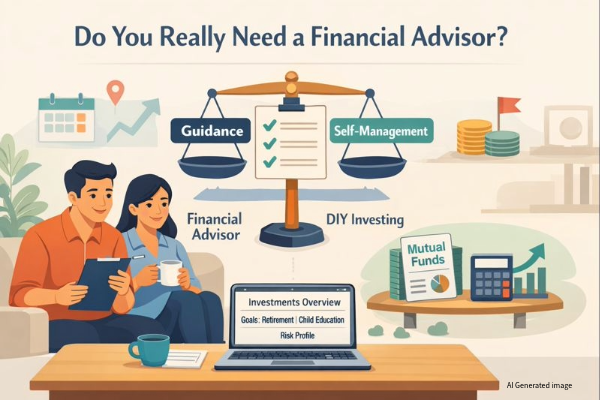
Let me be straight with you managing money today isn’t what it used to be. Gone are the days when you could simply put money in a fixed deposit and call it financial planning. Now? You’re juggling mutual funds, systematic investment plans, direct stocks, insurance policies, tax-saving schemes, retirement products, and an endless stream of financial advice flooding your social media feeds.
Everyone’s got something to say. Your colleague swears by direct equity. Your neighbor won’t stop talking about their latest SIP returns. YouTube gurus promise to make you rich. Instagram reels claim to decode the stock market in 60 seconds.
But here’s what nobody’s talking about. very few people actually have a coherent financial plan.
This brings us to the million-rupee question that’s probably been nagging at you:
Do you really need a financial advisor, or can you figure this out yourself?
I wish I could give you a simple yes or no answer. But the truth. It completely depends on where you are in life, what you are trying to achieve, and most importantly how you behave when money’s involved.
Let me walk you through this decision like I would with any client sitting across from me.
What Does a Financial Advisor Actually Do?
First, let’s clear up a massive misconception. A good financial advisor isn’t just someone who tells you which mutual fund to buy. That’s like saying a doctor only prescribes medicines.
Here’s what proper financial advisory actually involves:
They sit down with you and help define what you are actually working toward. Not vague dreams like “I want to be rich” but concrete goals with timelines. Your daughter’s education fund. That house you have been eyeing. The retirement lifestyle you imagine.
Then comes the planning part. They create a roadmap that’s actually realistic for your income and expenses. Not some cookie-cutter template, but something that fits your life.
The investment selection process goes deeper than what’s trending on Twitter. They match investments to your specific goals, your risk capacity, and your timeline. They help you save on taxes without pushing you into bad investment products just for the tax break.
Insurance planning is another critical piece. Most people are either under-insured or sold junk policies they don’t need. An advisor helps you get this right.
But here’s where the real value shows up. the ongoing relationship. Markets go up and down. Life throws curveballs. Your advisor reviews your portfolio, rebalances when needed, and most crucially stops you from making panic decisions during market crashes.
Think of them as the steady hand that keeps you from sabotaging your own financial future.
When You May Not Need a Financial Advisor
Look, I am a financial advisor, and even I’ll admit not everyone needs one right now.
You might be perfectly fine managing on your own if your financial life is genuinely simple. Maybe you are early in your career, your income and expenses are straightforward, and you are investing in basic products like index funds or your employer’s provident fund.
If you’ve taken the time to understand risk and market volatility, if you can watch your portfolio drop 20% without losing sleep or making rash decisions, you might have the temperament for DIY investing.
Some people genuinely enjoy learning about personal finance. They read, they research, they stay disciplined. If you have got the time and inclination to manage everything carefully, and your financial goals are limited and relatively short-term, you can handle this yourself.
But and this is important discipline and consistency aren’t optional here. They are everything.
Missing one SIP installment is no big deal. But developing a pattern of stopping and starting based on market movements? That’s where DIY investing falls apart for most people.
When a Financial Advisor Becomes Important
Here’s what I have noticed after years in this field. most people think they don’t need a financial advisor until they actually desperately need one. And by then, they have often made mistakes that cost them dearly.
Let me break down the situations where getting professional help stops being optional and starts being critical:
1. Your Income Has Increased
Congratulations on that promotion or business success! But here’s what typically happens next: your tax liability shoots up, your lifestyle expands to match your income (sometimes exceeding it), and suddenly you are making more money but saving less.
Higher income creates complexity. You need tax-efficient investment strategies. You need to make your money work harder. You need to avoid the trap of lifestyle inflation eating away your wealth-building potential.
A financial advisor helps you navigate this transition smartly. They’ll show you how to save on taxes through legitimate strategies – not sketchy schemes. They’ll help you allocate money efficiently across different goals instead of letting it sit idle in your savings account or getting wasted on impulse purchases.
2. You Have Multiple Financial Goals
Here’s where things get really complicated. You want to buy a house in the next five years. You have got kids whose education you need to fund. Retirement planning is looming. Maybe you are also thinking about wealth creation or supporting aging parents.
Each of these goals needs a different strategy. The money you are investing for your child’s education 15 years from now should be invested completely differently from your house down payment fund.
A financial advisor helps you prioritize these goals realistically. They’ll tell you what’s achievable given your current income and what might need adjustment. They align your investments to your timeline and risk profile for each specific goal.
Without this structure, most people end up either chasing the highest returns with money they can’t afford to risk, or playing it too safe with long-term funds that should be growing aggressively.
3. You Feel Confused by Too Many Options
ELSS or PPF for tax saving? Regular funds or direct funds? Should you invest in debt funds or stick with fixed deposits? Term insurance or ULIP? Small cap funds or large cap?
If your head’s spinning just reading those questions, you are not alone. The financial products available today are overwhelming. Each has its place, but figuring out which belongs in your portfolio requires expertise.
An advisor cuts through the noise. They bring clarity and structure to what feels like chaos. Instead of you spending hours researching and still feeling uncertain, they provide informed recommendations based on your specific situation.
4. You React Emotionally to Markets
Be honest with yourself about this one. When markets crashed during COVID, what did you do? When markets hit all-time highs, how did you feel about your current investments?
Many investors smart, successful people in their own fields make terrible decisions when emotions kick in. They stop their SIPs when markets fall because it feels like throwing good money after bad. They invest heavily during market peaks because of FOMO. They chase last year’s best-performing funds, only to watch them underperform next year.
A financial advisor acts as a buffer between your emotions and your money. They have seen market cycles before. They know today’s crash is tomorrow’s opportunity. They stop you from selling low and buying high which alone can save you lakhs over time.
5. You Want Long-Term Peace of Mind
Money stress is real. Lying awake wondering if you are doing the right thing with your savings. Worrying whether you’ll have enough for retirement. Feeling anxious about whether your family would be okay financially if something happened to you.
These concerns affect your quality of life, your relationships, your health. A good financial advisor helps you sleep better at night. They give you confidence that you are on the right track. They provide the peace of mind that comes from knowing someone knowledgeable is looking out for your financial interests.
Can You Rely Only on Online Advice?
YouTube videos, finance blogs, Instagram reels, Twitter threads there’s an ocean of free financial content out there. And yes, it’s great for learning basics and understanding concepts.
But here’s what online content can’t do. it can’t personalize advice to your specific situation.
What works brilliantly for someone else might be completely wrong for you. That aggressive investment strategy might suit someone with stable dual income and no dependents but terrible for you with unstable income and aging parents to support.
A financial advisor looks at your complete picture. Your cash flow patterns. Your existing liabilities. Your dependents and their needs. Your personal risk tolerance. Your investment time horizon. Your career trajectory. Your life goals.
That level of customization where every recommendation is tailored specifically to you you simply can’t get from generic online content, no matter how good it is.
How to Choose the Right Financial Advisor
Not all financial advisors are created equal. Some are excellent. Some are mediocre. And some, frankly, are just sales people pushing products for commissions.
Here’s what to look for. Make sure they are SEBI-registered or hold proper qualifications like CFP. This isn’t optional it’s about ensuring they meet regulatory standards.
A good advisor focuses on planning first, products second. If someone’s pushing specific investment products in your first meeting before understanding your goals, run.
They should explain things in language you actually understand. Finance has enough jargon. Your advisor’s job is to simplify, not complicate.
Transparency about fees and commissions is non-negotiable. You should know exactly how they are compensated and whether they have conflicts of interest.
Finally, they should review your plan regularly. Your life changes. Markets change. Your plan needs to evolve too.
Remember: a good advisor educates you. They want you to understand your finances better, not feel dependent on them for every small decision.
Cost vs Value: Is a Financial Advisor Worth the Money?
I get it. Advisory fees feel like an expense, especially when you’re watching every rupee.
But let me flip the question: how much will wrong decisions cost you?
Buying the wrong insurance policy could mean lifelong regret if you actually need to claim it. Poor asset allocation could mean your investments grow at 6% instead of 12% – compounded over decades, that’s crores of rupees lost. Emotional investing during market swings could destroy wealth you spent years building.
One panic decision during a market crash could wipe out gains that took years to accumulate. One wrong insurance product could mean paying premiums for 20 years with nothing to show for it.
A good financial advisor often saves you far more money than they charge. They help you avoid expensive mistakes. They optimize your taxes. They ensure you’re in the right investments for your goals.
Final Thoughts: Do You Really Need a Financial Advisor?
Here’s how I want you to think about this decision:
You don’t hire a financial advisor because you are incapable of managing money. You hire one because money decisions are too important to get wrong. Because the cost of mistakes is too high. Because your time is valuable. Because emotional decisions are expensive.
If your finances are getting more complex, if your responsibilities are growing, if you find yourself confused more often than confident having a trusted financial advisor might be one of the smartest investments you make.
Don’t think of a financial advisor as an expense. Think of them as a long-term partner in your financial journey. Someone who’s in your corner, helping you make better decisions, avoid costly mistakes, and ultimately achieve the financial freedom you are working so hard for.
The question isn’t whether you can manage without an advisor. The question is. what would your financial life look like with the right guidance? What goals could you achieve with proper planning? What mistakes could you avoid? What peace of mind could you gain?
Only you can answer whether that’s worth it.
FAQs
Do I really need a financial advisor if I already invest in SIPs?
SIPs are just a tool. A financial advisor ensures your SIPs are aligned with your goals, risk profile, and time horizon, and helps review them regularly.
Can I manage my finances without a financial advisor?
Is a financial advisor only for wealthy people?
What is the difference between a financial advisor and a mutual fund agent?
How much does a financial advisor charge in India?
Disclaimer
The information provided in this article is for educational and informational purposes only and should not be considered as financial, investment, tax, or legal advice.
Financial decisions should be made based on individual goals, risk appetite, and financial situation. Readers are advised to consult a qualified and SEBI-registered financial advisor before making any investment or financial planning decisions.