
How to Reduce Your EMI Without Changing Income
Table of Contents
Struggling with high EMIs. Learn 9 proven ways to reduce your EMI burden without changing your income. Practical tips for home loans, personal loans & more in India.
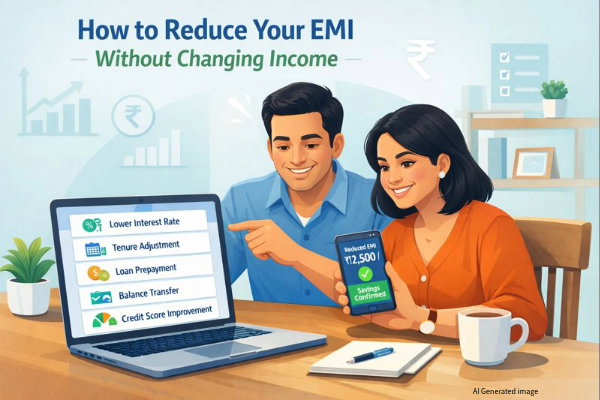
Let’s be honest EMIs can feel like a weight on your chest, especially when multiple loan repayments eat into your monthly salary. Whether it’s a home loan that seemed affordable five years ago, a car loan that now feels expensive, or that personal loan you took for an emergency, the combined EMI burden can make even a decent salary feel insufficient.
I have spoken to countless Indian families who feel stuck in this cycle. They think the only way out is earning more money. But here’s something most people don’t know. you can actually reduce your EMI burden significantly without waiting for that salary hike or starting a side hustle.
Yes, you read that right. Through smarter loan management, better negotiation, and timely financial decisions, you can ease the monthly pressure and breathe easier. And I am going to show you exactly how.
1. Check If You Can Get a Lower Interest Rate
Your loan’s interest rate is the single biggest factor that decides how much EMI you pay every month. Think about it even a 0.5% reduction in interest rate can save you thousands of rupees over the loan tenure.
Here’s what most borrowers miss. if you took a home loan three or four years back, there’s a good chance the interest rate you are paying is higher than what banks are offering today. This is especially true for floating rate home loans, where market rates have fluctuated quite a bit.
What you should do right now:
Start by checking the current home loan interest rates across different banks and NBFCs. Make a simple list. Then compare it with what you are currently paying. The difference might surprise you.
Next, walk into your bank branch or call your relationship manager. Tell them you have noticed that new customers are getting better rates. Ask if they can revise your interest rate downward. Banks want to retain good customers, and many times they will agree to reduce your rate rather than lose you to a competitor.
If your current lender isn’t willing to budge, consider a home loan balance transfer. Yes, there are processing fees involved, but if you are going to save significantly on EMI or total interest, it’s worth doing the math. Even for personal loans and car loans, some lenders offer balance transfer options at lower rates.
The impact of this single step can be huge. On a ₹30 lakh home loan, reducing your interest rate from 9% to 8.5% can lower your EMI by around ₹1,500 to ₹2,000 per month. That’s money you can save or use for other needs.
2. Extend Loan Tenure to Reduce Monthly EMI
I know what you are thinking “Won’t extending tenure mean I pay more interest overall?” Yes, it does. But hear me out.
Sometimes life throws situations at you where you need immediate monthly relief more than long-term savings. Maybe your expenses have increased, or you are dealing with an income dip, or you simply want more breathing room in your budget.
Extending your loan tenure is one of the fastest ways to reduce EMI. Here’s a real example. if you have a home loan of ₹40 lakhs at 8.5% interest with 15 years remaining, your EMI would be around ₹39,500. But if you extend the tenure to 25 years, the EMI drops to roughly ₹32,500—a reduction of ₹7,000 per month.
Now, I am not saying this should be your permanent strategy. The smart approach is to use tenure extension when cash flow is genuinely tight. Once your finances stabilize maybe you get that increment or your child’s school fees reduce you can start making prepayments to shorten the tenure again.
Most Indian banks are quite flexible about tenure extension requests, especially if you have a good repayment track record. It’s worth having a conversation with your lender about this option.
3. Make Partial Prepayments Whenever Possible
You don’t need to wait until you have a massive lump sum to make a difference to your loan. Even small, regular prepayments can significantly reduce your loan burden over time.
Think about the financial windfalls you receive during the year. Your annual bonus instead of splurging all of it, what if you directed a portion toward loan prepayment. Tax refunds, maturity of fixed deposits, gifts received during festivals, or even that freelance project payment these are all opportunities.
Here’s why this works so well. every rupee you prepay goes directly toward reducing your principal amount. And since interest is calculated on the outstanding principal, reducing it means you pay less interest going forward. This either reduces your EMI or shortens your loan tenure, depending on what option you choose.
And here’s the best part for Indian borrowers RBI guidelines mandate that banks cannot charge prepayment penalties on floating rate home loans. So if you have a floating rate home loan, you can prepay as much as you want, whenever you want, without any extra cost.
Even prepaying ₹50,000 or ₹1 lakh once a year can make a meaningful impact. Don’t underestimate the power of these smaller prepayments.
4. Choose EMI Reduction When Given the Option
Whenever you make a prepayment, your bank will typically give you two choices. reduce your EMI or reduce your loan tenure.
Most financial advisors will tell you that reducing tenure is better because you save more on total interest paid. And mathematically, they are correct. But life isn’t just about mathematical optimization, is it?
If you are feeling the monthly pinch, if your household budget is stretched thin, then reducing EMI is absolutely the right choice. That extra ₹3,000 or ₹5,000 in your hand every month improves your quality of life immediately. You can use it for children’s education, healthcare, building an emergency fund, or even starting some small investments.
Remember, personal finance is personal. Choose what makes your life easier right now. You can always focus on tenure reduction later when you are in a more comfortable position.
5. Consolidate Multiple Loans Carefully
Are you juggling multiple EMIs. A personal loan EMI, credit card outstanding converted to EMI, that consumer durable loan for the TV, maybe even a two wheeler loan.
Managing multiple high-interest EMIs is not just financially draining it’s mentally exhausting. You are constantly tracking different due dates, different amounts, different bank accounts.
Loan consolidation can be a game changer in such situations. The idea is simple. take one larger loan at a lower interest rate and use it to close multiple smaller high-interest loans. Suddenly, you have just one EMI to track, and if you have negotiated well, it could be lower than the combined EMI you were paying earlier.
But and this is important you need to be careful here. Don’t consolidate blindly. Calculate the total cost including processing fees and any prepayment penalties on existing loans. Make sure the new EMI is genuinely lower and sustainable. And most importantly, don’t use the extra cash flow to take on more debt. That defeats the entire purpose.
Debt consolidation works best when you are committed to getting out of the debt trap, not when you are looking for temporary relief to take on more loans.
6. Improve Credit Score to Negotiate Better Terms
Your credit score isn’t just important when you apply for a loan. It continues to matter throughout your loan journey.
A good credit score ideally 750 and above gives you negotiating power. Banks view you as a low-risk customer. This means you can request interest rate reductions with more confidence. It helps during refinancing discussions. And if you are considering a loan balance transfer, you are more likely to get approved at attractive rates.
So how do you improve your credit score if it’s not great. Start with the basics.
Pay every single EMI on time. Set up auto-debit so you never miss a payment. Even one missed payment can hurt your score significantly.
Keep your credit card utilization low. If your credit limit is ₹1 lakh, try not to use more than ₹30,000 of it regularly. High utilization signals financial stress to credit bureaus.
Avoid making multiple loan inquiries in a short period. Every time you apply for a loan or credit card, it shows up as a hard inquiry on your credit report. Too many inquiries suggest you are desperate for credit, which lowers your score.
Check your credit report at least once a year for errors. Sometimes wrong information gets reported loans you have already closed still showing as active, or payments marked as delayed when they weren’t. Dispute these errors immediately.
Building a good credit score takes time and discipline, but it’s one of the most powerful financial tools at your disposal. It can save you lakhs of rupees over your lifetime through better loan terms.
7. Avoid High-Interest Debt Wherever Possible
Credit cards and unsecured personal loans are financial traps waiting to happen. The interest rates are shockingly high credit cards can charge 36-42% annual interest on unpaid balances, and personal loans typically range from 11% to 24%.
If you already have such loans, make them your first priority for repayment. The high interest means your money is being drained away rapidly. Redirect any extra cash toward clearing these expensive debts first.
And please, avoid rolling credit card balances. When you pay only the minimum amount due, you are essentially paying interest on interest. That shopping spree or vacation funded by credit card might end up costing you 40-50% more than the actual price once you factor in compounding interest.
Some borrowers consider secured loan options like loans against fixed deposits or gold when they need funds. These come at lower interest rates compared to unsecured loans. But remember you are putting your assets at risk. Use this option only when absolutely necessary and when you are confident about repayment.
The fundamental principle here is simple. borrow smartly, and when you do borrow, repay the expensive debt first.
8. Use Prepayments Instead of Complex EMI Structures
In Western countries, you will find options like bi-weekly EMIs where you pay half the EMI every two weeks. This results in an extra month’s payment every year, reducing your principal faster.
In India, such options aren’t commonly available from banks. But you can create a similar effect on your own. Make small voluntary prepayments whenever you have surplus funds. Even paying one extra EMI amount in a year broken into smaller chunks will reduce your principal significantly.
The beauty of this approach is its flexibility. You are not locked into any structure. You prepay when you have money, and you don’t when you don’t. No pressure, no commitments, but steady progress toward reducing your loan burden.
9. Do Not Ignore Your Loan After Disbursement
This is perhaps the biggest mistake Indian borrowers make. Once the loan is sanctioned and the money is received, they mentally file it under “done” and never look at it again until it’s fully repaid.
Loans need active management. Set a reminder to review your loans at least once a year. Check if interest rates have changed especially if you are on a floating rate. Check your outstanding balance. Compare current market rates with what you are paying.
This simple annual review can reveal opportunities you’d otherwise miss. Maybe it’s the right time for a balance transfer. Maybe your bank has a special rate reduction offer for existing customers. Maybe you can now afford higher EMIs and should consider shortening your tenure.
Financial fitness requires regular check-ups, just like physical fitness. Don’t set and forget your loans.
Final Thoughts
Reducing your EMI burden doesn’t require a promotion or a second income stream. What it requires is awareness, action, and consistent financial discipline.
By negotiating better interest rates, making smart prepayment decisions, managing your credit score, and avoiding high-interest debt traps, you can significantly ease your monthly financial stress. These aren’t complicated strategies requiring expert knowledge. They are practical steps any Indian borrower can take.
The goal isn’t just to lower your EMI numbers on paper. It’s to create genuine breathing room in your budget, reduce financial anxiety, and build a foundation for long-term wealth creation. When you are not drowning in EMI payments, you can focus on what really matters saving for your children’s future, building an emergency fund, investing for retirement, or simply enjoying life without constant money worries.
Start with one step today. Review your current interest rates, or make a small prepayment, or check your credit score. That one small action could be the beginning of your journey toward financial freedom.
Remember, every rupee saved on unnecessary interest is a rupee that works for you instead of the bank. And that’s a worthy goal for every Indian household.
FAQs
Can I really reduce my EMI without increasing my income?
Does extending loan tenure reduce EMI?
Will prepayment reduce EMI or loan tenure?
When you make a partial prepayment, lenders usually give you two options:
- Reduce EMI, or
- Reduce loan tenure
If your goal is monthly relief, you should choose EMI reduction. Tenure reduction helps save interest in the long run but does not reduce monthly outflow.
Will prepayment reduce EMI or loan tenure?
When you make a partial prepayment, lenders usually give you two options:
- Reduce EMI, or
- Reduce loan tenure
If your goal is monthly relief, you should choose EMI reduction. Tenure reduction helps save interest in the long run but does not reduce monthly outflow.
Is there any penalty for prepaying a home loan in India?
For most floating rate home loans taken by individuals, banks are not allowed to charge prepayment or foreclosure penalties, as per RBI guidelines.
However, terms may vary for fixed-rate loans or loans taken from NBFCs. Always check your loan agreement and Key Fact Statement (KFS).
Can I ask my bank to reduce my interest rate?
Yes. Borrowers can approach their existing lender to request an interest rate revision or repricing, especially if:
- Market interest rates have fallen
- Your credit score has improved
- You have a good repayment history
Banks may charge a small administrative fee for repricing.