
Is Your Health Insurance Enough for a Medical Emergency Today?
Discover if your health insurance enough for a medical emergency. Learn about sum insured, room rent caps, super top-ups, and hidden policy gaps that could cost you lakhs.
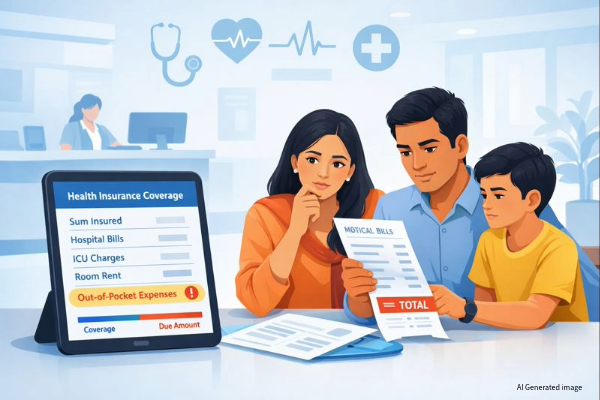
Medical emergencies strike without warning. You are going about your day, feeling perfectly fine, and suddenly you find yourself in an emergency room. In those critical moments, two worries consume your mind your health and the mounting medical bills.
Here’s something most people don’t realize. owning health insurance doesn’t automatically guarantee financial protection. I have seen countless families struggle despite having policies in place. The culprit. Inadequate coverage, hidden clauses, outdated sum insured amounts, and sub-limits that quietly drain your savings during medical emergencies.
The question you should be asking yourself isn’t “Do I have health insurance?” Rather, ask yourself “Is my health insurance enough to handle a medical emergency today?”
Let me walk you through everything you need to know.
Why Health Insurance Falls Short During Emergencies
Medical inflation in India isn’t just rising it’s racing ahead at 12-15% annually. That’s significantly higher than the general inflation rate. Think about what this means for your coverage. The ₹5 lakh health insurance policy you purchased seven or eight years ago. Its real value has eroded dramatically.
Let me paint a realistic picture of current medical costs:
Heart surgery in metropolitan cities now costs between ₹4-7 lakh. Cancer treatment easily crosses ₹10-15 lakh in just the first year. Even ICU charges alone range from ₹15,000 to ₹25,000 per day and serious medical emergencies often require multiple days in intensive care.
Yet, most Indian families are still relying on:
- Employer health insurance covering ₹3-5 lakh
- Individual health insurance policies worth ₹2-3 lakh
- Old family floater plans purchased years ago with outdated coverage
This massive gap between actual hospital costs and health insurance coverage is precisely where medical emergencies transform into financial nightmares.
5 Key Questions to Check If Your Health Insurance Is Enough
1. Is Your Sum Insured Realistic for Today’s Hospital Costs?
Let’s talk numbers that actually matter in 2026.
If you live in metro cities like Mumbai, Delhi, Bangalore, or Chennai, your family needs minimum health insurance coverage of ₹10-15 lakh. Living in tier-2 cities. You still need at least ₹7-10 lakh. And if you are a senior citizen or have a family history of serious illnesses, you should be looking at ₹15-25 lakh coverage, ideally supplemented with super top-up plans.
Add up all your health insurance policies your personal policy plus your employer coverage. If the total falls below these figures, you are underinsured. It’s that simple.
Here’s the thing. health insurance isn’t about covering average medical expenses. It’s about protecting yourself against worst-case scenarios. A medical emergency doesn’t care about your budget it demands immediate, expensive treatment.
2. Are You Depending Only on Employer Health Insurance?
I understand the temptation. Your employer provides health insurance, so why spend money on another policy. Let me explain why this thinking is dangerous.
Employer health insurance has serious limitations. The coverage ends the moment you change jobs or, worse, lose your job. The sum insured is typically limited and doesn’t grow with your needs. You have zero control over policy terms, and family members often don’t get adequate coverage.
Imagine facing a medical emergency during a job transition. No employer coverage, no financial backup just mounting hospital bills and depleting savings.
The solution is straightforward. always maintain a personal health insurance policy, regardless of employer coverage. Treat employer insurance as a bonus, not your primary protection.
3. Does Your Policy Have Room Rent Limits?
This clause catches more people off-guard than almost any other. Room rent limits are one of the leading causes of claim deductions and policyholder frustration.
Here’s how it works. Your health insurance policy caps room rent at ₹5,000 per day. During a medical emergency, you are admitted to a ₹8,000 per day room (which might be the only available option in that hospital). Now your insurer applies proportionate deduction not just on the room rent, but on every single expense doctor fees, ICU charges, surgery costs, everything.
Many people discover this devastating clause only after hospitalization, when they are reviewing their final bill.
What should you look for? Choose health insurance policies that clearly state “No room rent limit” or “Single private room allowed without restrictions.” These policies cost slightly more, but they prevent massive out-of-pocket expenses during medical emergencies.
4. Are There Sub-Limits on Treatments?
Some health insurance policies contain silent killers sub-limits on specific treatments. These caps restrict how much the insurer will pay for particular procedures, regardless of your sum insured.
Common treatments with sub-limits include cataract surgery, knee replacement, hernia operations, gall bladder procedures, and maternity expenses.
Picture this scenario. Your sum insured is ₹10 lakh (looks good, right?). But your policy has a sub-limit of ₹1.5 lakh for knee replacement surgery. The actual cost turns out to be ₹3.5 lakh. Guess who pays the ₹2 lakh difference. You do.
Modern health insurance policies increasingly offer coverage without sub-limits. If you are holding an older policy, there’s a good chance it contains multiple sub-limits that could significantly impact your medical emergency expenses.
5. Do You Have a Health Insurance Top-Up or Super Top-Up?
This is where most people leave enormous value on the table. Super top-up plans are genuinely game-changing for medical emergency protection.
A super top-up plan provides ₹20-50 lakh additional coverage at surprisingly low premiums. It kicks in after a deductible amount (typically equivalent to your base policy sum insured).
Let me break down a real example:
- Base health insurance policy: ₹5 lakh
- Super top-up plan: ₹20 lakh (with ₹5 lakh deductible)
- Total medical emergency protection: ₹25 lakh
For catastrophic medical emergencies requiring extended hospitalization or expensive treatments, super top-up plans provide that crucial financial cushion. The premiums are incredibly affordable compared to increasing your base policy to the same coverage level.
This is honestly the smartest strategy for preparing for major medical emergencies without breaking your budget.
Hidden Gaps That Can Hurt During Emergencies
Even when your sum insured appears sufficient, several hidden factors can sabotage your health insurance coverage during medical emergencies.
Check your policy for waiting periods on specific diseases. Some conditions aren’t covered for the first 2-4 years after purchasing health insurance. Look for co-payment clauses, especially common in senior citizen policies, where you are required to pay a percentage of every claim. Examine exclusions for modern treatments some older policies don’t cover advanced procedures. Verify network hospital availability in your city, because cashless treatment makes medical emergencies significantly less stressful.
Finally, always check the insurer’s claim settlement ratio. A policy that looks cheap often becomes expensive when you actually need it.
Real-Life Scenario: Why “Enough” Matters
Let me share a real example that illustrates why adequate health insurance coverage matters so much.
A 42-year-old salaried professional had employer coverage of ₹5 lakh plus a personal health insurance policy worth ₹3 lakh. Total coverage: ₹8 lakh. On paper, that seems decent, right?
He suffered a cardiac emergency requiring immediate surgery. The total hospital bill came to ₹9.8 lakh. Despite having ₹8 lakh coverage, he paid ₹1.8 lakh out-of-pocket, plus additional non-medical expenses for family stay, transportation, and post-discharge care.
Had he invested in a ₹20 lakh super top-up plan (costing perhaps ₹5,000-7,000 annually), his personal expense during this medical emergency would have been nearly zero.
How Often Should You Review Your Health Insurance?
Health insurance isn’t a “buy and forget” financial product. Your coverage needs evolve with your life.
Review your health insurance policy every 2-3 years as a baseline. But also reassess coverage after major life events. marriage, having children, significant income increases, or relocating to metro cities with higher medical costs.
Your health insurance coverage should grow alongside your lifestyle and family responsibilities. What was adequate five years ago is almost certainly insufficient today.
Quick Checklist: Is Your Health Insurance Emergency-Ready?
Use this simple checklist to evaluate your current health insurance coverage:
✔ Total coverage at least ₹10-15 lakh (considering all policies combined)
✔ Separate personal health insurance policy (not solely dependent on employer coverage)
✔ No room rent limit or restrictions on room type
✔ No major sub-limits on common treatments
✔ Super top-up plan added for catastrophic medical emergencies
✔ Insurer with strong claim settlement ratio (preferably above 95%)
If you can’t check off every item, it’s time to seriously consider upgrading your health insurance coverage.
Final Thoughts
Medical emergencies are inherently stressful, frightening experiences. Your health insurance should reduce that anxiety, not compound it with financial worries and surprise expenses.
The ultimate goal is simple. focus on recovery, not hospital bills. Focus on your loved one’s health, not whether your coverage is adequate.
If you haven’t reviewed your health insurance policy recently, today is the perfect day to start. Don’t wait for a medical emergency to discover coverage gaps. By then, it’s already too late to fix the problem.
Protect yourself now. Upgrade your coverage now. Review your policy now. Because when a medical emergency strikes, you want your only concern to be getting better not paying bills.