
Personal Loan vs Credit Card Loan – Which Is Better?
Table of Contents
Learn Personal Loan VS Credit Card Loan Which is better.
Let’s be honest when you are stuck in a financial crunch, whether it’s an unexpected medical bill, a sudden home repair, or even a dream vacation you have been planning, the first thing that comes to mind is. where do I get the money from and fast.
Most of us end up weighing two popular options: should I take a personal loan, or should I just use my credit card. Both seem convenient, both give you money quickly, but here’s the thing they are not the same. Not even close.
The interest rates are different. The repayment terms are different. Even the way they affect your credit score differs. So if you are serious about making a smart financial decision, you need to understand what you are signing up for.
In this guide, I will walk you through everything you need to know about personal loans and credit card loans what they are, how they work, and most importantly, which one you should choose based on your unique situation.
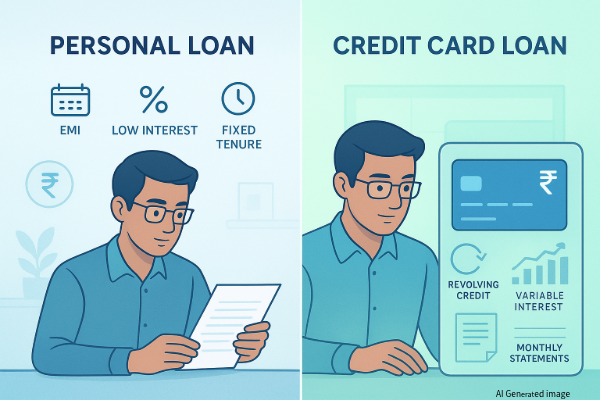
What Exactly Is a Personal Loan?
A personal loan is essentially a chunk of money that a bank or financial institution lends you without asking for any collateral. That means you don’t have to pledge your house, car, or gold. The bank looks at your income, your credit score, and your ability to repay, and if everything checks out, they approve the loan.
You can use a personal loan for pretty much anything wedding expenses, medical emergencies, home renovation, education fees, debt consolidation, or even a family trip. The flexibility is one reason why personal loans are so popular.
Here’s How Personal Loans Work
Once your personal loan is approved, the entire loan amount gets credited to your account in one go. You then repay it in fixed monthly installments (EMIs) over a predetermined period, which could be anywhere from 1 year to 5 years, and sometimes even longer.
Personal Loan Features at a Glance:
- Loan amount typically ranges from ₹50,000 to depending on the lender
- Tenure options between 1 to 5 years (some banks offer up to 6 years)
- Fixed interest rates mean your EMI stays the same every month
- No collateral or security required
- Predictable repayment schedule makes budgeting easier
If you need a substantial amount and prefer the discipline of fixed monthly payments, a personal loan is usually the way to go.
What About a Credit Card Loan?
Now, credit card loans are a bit different. They come in two main forms, and it’s important to know the difference because the costs can vary wildly.
Loan on Credit Card (EMI Conversion)
This is when your bank lets you convert a part of your available credit limit into a loan that you repay through EMIs. It’s super convenient because you don’t need to apply for anything new your bank just offers it to you based on your existing credit card relationship.
Cash Advance
This is when you actually withdraw cash using your credit card from an ATM. Sounds convenient, right Well, here’s the catch cash advances come with sky high interest rates, zero grace period, and additional withdrawal fees. It’s one of the most expensive ways to borrow money.
Credit Card Loan Features:
- Instant approval with little to no documentation
- Loan amount is capped by your existing credit card limit
- EMI tenure usually ranges from 3 to 24 months, though some banks go up to 48 months
- Interest rates tend to be higher than personal loans
- Best suited for small, short term financial needs
If you need a small amount urgently and can pay it back quickly, a credit card loan might work. But if you are looking at a larger expense, you will want to think twice.
Personal Loan vs Credit Card Loan: The Real Differences
Let’s get into the details that actually matter when you are deciding between these two options.
1. Interest Rates – Where the Cost Really Lies
Interest rates are probably the single most important factor because they determine how much extra you will end up paying.
- Personal Loan Interest Rate: Typically ranges from 10% to 24% per annum
- Credit Card EMI Loan Interest Rate: Usually between 13% to 25% per annum
- Cash Advance Interest Rate: This is where it gets scary around 2.5% to 3.5% per month, which translates to roughly 30%–42% annually
Bottom line: Personal loans almost always come out cheaper unless you are converting a credit card purchase into a very short EMI tenure. If you are considering a cash advance, stop right there it’s almost never worth it.
2. Loan Amount – How Much Can You Actually Borrow
When it comes to the amount you can borrow, personal loans have a clear advantage.
Personal Loan: Banks can lend you anywhere from ₹50,000 up to ₹40–50 lakh, depending on your income and credit profile
Credit Card Loan: You are limited to whatever credit limit your card issuer has given you, which for most people is significantly less than what they could get through a personal loan
Winner here: If you are planning something big like a wedding, major home renovation, or expensive medical treatment a personal loan gives you the financial muscle you need.
3. Repayment Tenure – How Long Do You Have to Pay It Back?
Repayment flexibility matters because it directly impacts your monthly budget.
- Personal Loan Tenure: Ranges from 12 months to 60 months, and some lenders even offer up to 72 months
- Credit Card Loan Tenure: Typically 3 to 24 months, though certain banks may extend up to 48 months
The takeaway: Longer tenure means smaller EMIs, which can make a big difference if you are managing other expenses. Personal loans give you more breathing room.
4. Speed and Approval Process
Let’s talk about how quickly you can get your hands on the money.
Personal Loan Approval: If you are a pre approved customer, it can be instant. Otherwise, expect 1–2 days for documentation and approval
Credit Card Loan Approval: Almost always immediate since your KYC and credit profile are already on file
For pure speed: Credit card loans win. But remember, speed shouldn’t be your only consideration especially if it’s going to cost you more in interest.
5. Documentation Requirements
Nobody likes paperwork, but sometimes it’s unavoidable.
Personal Loan Documentation: You will need income proof, KYC documents, and bank statements
Credit Card Loan Documentation: Minimal to zero, since you are already a cardholder
Verdict: Credit card loans are definitely easier if you already have an active credit card and don’t want to deal with documentation.
6. Fees and Hidden Charges
Both types of loans come with fees, but the structure is different.
Personal Loan Fees:
Processing fee: Usually 1%–3% of the loan amount
Foreclosure charges may apply if you decide to repay early (varies by bank)
Credit Card Loan Fees:
- Processing fee: 1%–2% plus GST
- Cash advance fee: 2.5%–3% per withdrawal
- Late payment penalties can be steep
The real difference: Personal loans tend to have more transparent and predictable fee structures, while credit card loans can hit you with surprise charges if you are not careful.
7. Impact on Your Credit Score
Your credit score affects your ability to borrow money in the future, so this matters more than you might think.
- Missing even one credit card payment can seriously damage your credit score
- High credit utilization (using too much of your credit limit) also lowers your score
- Personal loans, when repaid on time, improve your credit mix and build a solid long term credit history
Long-term thinking: Personal loans are generally healthier for your credit profile, especially if you are disciplined about repayments.
When Should You Choose a Personal Loan?
Go for a personal loan if:
- You need a large sum of money (₹2 lakh or more)
- You want the benefit of lower interest rates
- You prefer longer repayment tenure with smaller, manageable EMIs
- You are planning a major life event wedding, home renovation, education, medical procedure
- You want a structured, predictable repayment plan that helps you stay disciplined
Personal loans reduce your overall borrowing cost and make financial planning much easier.
When Should You Choose a Credit Card Loan?
Opt for a credit card loan if:
- You need money right now, like today or tomorrow
- The amount you need is within your credit card limit
- You are confident you can repay it within a few months
- You want zero hassle, no documentation, no waiting
- You already use your credit card regularly and are comfortable managing it
Credit card loans work best for short term, urgent, and smaller expenses that you can clear quickly.
So, Which One Is Actually Better?
Here’s the truth there’s no one size fits all answer. It depends entirely on your specific financial situation, how much you need, how quickly you need it, and how long you will take to repay.
Choose a Personal Loan if you want:
- Lower interest rates
- A higher loan amount
- Longer EMI tenure
- Stable, predictable monthly payments
Choose a Credit Card Loan if you need:
- Immediate money
- A small amount for a short period
- Quick access without paperwork
Most financial advisors will tell you the same thing. for long term or high value expenses, a personal loan is almost always the smarter choice. For short term emergencies or smaller amounts, a credit card loan offers unbeatable convenience.
Final Thoughts
At the end of the day, both personal loans and credit card loans have their place in your financial toolkit. The key is knowing when to use which one.
Before you borrow, take the time to compare interest rates, read the fine print on processing fees, understand the tenure options, and be honest with yourself about your ability to repay. Making an informed decision doesn’t just save you money it also protects your credit score and keeps your financial future secure.
Borrow smart, repay responsibly, and always choose the loan that fits your life, not just your immediate need.
FAQs
What is the main difference between a personal loan and a credit card loan?
A personal loan is a long term unsecured loan with a fixed EMI and lower interest rates.
A credit card loan is a short term loan based on your card limit, usually with higher interest but faster approval.
Which loan has lower interest rates—personal loan or credit card loan?
When should I choose a personal loan?
When should I choose a credit card loan?
Choose a credit card loan when you need instant money, want no documentation, or the required amount is small and short term.