
How to Protect Your Family Financially from Emergencies
Table of Contents
Learn proven strategies to protect your family financially from emergencies. Discover how emergency funds, insurance, and smart planning can secure your family’s future.
Life has a way of throwing curveballs when we least expect them. One day everything’s running smoothly, and the next, you are dealing with a medical emergency, a job loss, or an unexpected crisis that threatens to derail your family’s financial stability. I have seen it happen to people around me, and honestly, it’s terrifying to watch families scramble when they are unprepared.
But here’s the thing while we can’t predict when emergencies will strike, we absolutely can prepare for them. Protecting your family financially from emergencies isn’t about being pessimistic. it’s about being smart, responsible, and proactive. Think of it as building a financial safety net that catches you before you hit rock bottom.
In this guide, I am going to walk you through seven practical ways to protect your family financially from emergencies. These aren’t complicated Wall Street strategies they are real, actionable steps that everyday families can implement starting today.
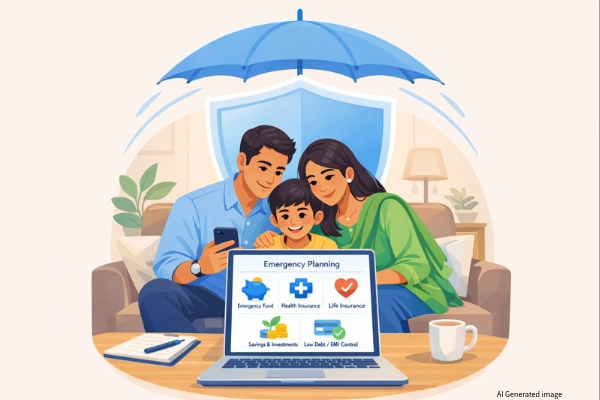
1. Maintaining an Emergency Fund
Let’s start with the foundation of financial protection. your emergency fund. This is basically your “stuff happens” money cash you have set aside specifically for those unexpected expenses that pop up out of nowhere.
So how much should you save. The general wisdom suggests keeping six months’ worth of essential expenses tucked away safely. But honestly, that’s just a starting point. If you are self employed, have kids depending on you, or work in an industry where jobs aren’t exactly stable, you might want to push that to eight or even twelve months.
Here’s what I mean by “essential expenses”. rent or mortgage, utilities, groceries, insurance premiums, loan payments the stuff you absolutely cannot skip. Not your streaming subscriptions or weekend dining out. Just the bare necessities.
Now, where should you keep this emergency fund. This is crucial. Your emergency money needs to be somewhere you can access it immediately. A savings account works perfectly. What doesn’t work. Locking it up in fixed deposits with penalties for early withdrawal, or worse, throwing it into the stock market where it could lose value right when you need it most.
The whole point of an emergency fund is that it’s there when emergencies happen. Not next week, not after a three month notice period immediately. And it should be protected from market ups and downs because the last thing you need during a crisis is to discover your emergency fund has shrunk by 20%.
Building this fund takes discipline, I won’t lie. Start small if you have to. Even Rs. 5,000 a month adds up over time. The key is consistency and treating it like a non-negotiable expense, like your rent.
2. Health Insurance as a Risk Management Tool
Healthcare costs in India can be absolutely brutal. A single hospitalization can wipe out years of savings in a matter of days. I am not trying to scare you, but this is the reality we are living in.
This is where health insurance becomes non negotiable if you want to protect your family financially from emergencies. It’s essentially you transferring the financial risk of medical emergencies to an insurance company. You pay a relatively small premium every year, and they cover your medical bills when something goes wrong.
But not all health insurance policies are created equal. You need to pay attention to several things.
Sum Insured: This is the maximum amount your insurance will pay. In today’s healthcare environment, anything less than Rs. 5 lakhs per person is probably not enough. For families, consider policies offering Rs. 10 lakhs or more. Medical inflation is real, and costs keep climbing.
Room Rent Limits: Some policies cap how much they will pay for hospital rooms. If your policy has a room rent limit and you end up in a more expensive room, you might have to pay a portion of ALL your bills, not just the room charges.
Waiting Periods: Most policies won’t cover pre existing conditions immediately. You will need to wait anywhere from 2-4 years. Plan accordingly.
Policy Exclusions: Read the fine print. Know what’s not covered so there are no nasty surprises when you are already dealing with a health crisis.
Here’s something many people don’t realize. if you are relying solely on your employer’s health insurance, you are taking a risk. What happens if you change jobs. What if there’s a gap in employment. Getting your own family health insurance policy ensures continuous coverage regardless of your employment situation.
3. Life Insurance for Income Replacement
Nobody likes thinking about their own mortality, but if your family depends on your income, life insurance isn’t optional it’s essential for protecting your family financially from emergencies.
Let me be clear about what kind of life insurance I am talking about. term insurance. Not those complicated plans that mix insurance with investment. Just pure, simple term insurance that pays out a lump sum to your family if something happens to you.
Term insurance is incredibly affordable compared to other types of life insurance, and it does exactly what it needs to do replaces your income so your family can maintain their lifestyle, pay off debts, and handle future expenses even without you.
How much coverage do you need. There’s no one-size-fits-all answer, but here’s a framework to think about it:
Calculate your annual income and multiply it by 10-15 years. Then add any outstanding loans (home loan, car loan, personal loans). Add future major expenses like your children’s education or weddings. That gives you a ballpark figure.
For example, if you earn Rs. 10 lakhs annually, have a home loan of Rs. 30 lakhs, and anticipate Rs. 20 lakhs for your children’s education, you are looking at coverage of around Rs. 1.5-2 crores.
Sounds like a lot. The premium is usually quite reasonable, especially if you buy it when you are young and healthy. Waiting until you are older or have health issues makes it more expensive or even unavailable.
4. Income Stability and Dependence
Here’s an uncomfortable question. what happens if your family’s primary earner loses their job or can’t work. For many households, this is the scariest scenario because everything every single bill and expense depends on one person’s income.
Protecting your family financially from emergencies means reducing this vulnerability where possible. Now, I am not saying everyone should have multiple jobs or side hustles (though they can help). But it’s worth thinking about income diversification.
This could mean the non working spouse exploring work-from-home opportunities or freelancing. It could mean developing skills that are marketable if needed. It might mean investing in income generating assets over time.
Also, be realistic about your lifestyle relative to your income stability. If your income fluctuates or your job security is uncertain, maintaining a lifestyle that maxes out your earning capacity isn’t wise. Leave yourself some breathing room.
5. Debt and Cash Flow Management
Debt isn’t inherently bad, but excessive debt is like a ball and chain during emergencies. When you are already struggling, those fixed EMI payments don’t care about your circumstances they are due regardless.
The principle here is simple: keep your debt obligations manageable relative to your income. Financial experts often suggest that your total EMIs shouldn’t exceed 40-50% of your monthly income. The lower, the better, because it gives you flexibility.
Prioritize paying off high-interest debt first. Credit card debt with 36-42% annual interest That needs to go ASAP. Personal loans are next. Your home loan, with its lower interest rate and tax benefits, can be more relaxed.
Avoid the trap of taking new loans to pay off old loans. That’s just rearranging deck chairs on the Titanic. And be extremely cautious with credit cards during tough times they can quickly spiral into unmanageable debt.
Lower fixed commitments mean that if your income takes a hit, you have more room to maneuver. You can cut discretionary spending, but you can’t negotiate away your EMIs.
6. Documentation, Nomination, and Succession Planning
This might not seem as exciting as investing or saving, but trust me proper documentation can be the difference between your family accessing funds quickly during an emergency or facing months of bureaucratic nightmares.
Make sure all your bank accounts, insurance policies, investments, and retirement accounts have updated nomination details. Your nominees should be clearly specified so there’s no confusion about who gets what.
Create a centralized document (keep it secure but accessible to your spouse or trusted family member) that lists all your financial accounts, insurance policies, loans, and important contacts. Include account numbers, policy numbers, and where physical documents are stored.
And yes, you need a will. Even if you think you are too young or don’t have enough assets. A will isn’t about being morbid. it’s about making things easier for your family when they are already dealing with emotional trauma. The last thing they need is legal battles over your assets.
7. Periodic Review of Financial Arrangements
Life changes, and your financial protection strategies need to change with it. What made sense five years ago might not be adequate today.
Set a reminder to review your financial arrangements at least once a year. Ask yourself:
- Is my emergency fund still adequate for six months of expenses, or have my expenses increased?
- Does my health insurance coverage reflect my family’s current needs?
- Is my life insurance coverage still sufficient given my current income and responsibilities?
- Have I acquired new debts or paid off old ones?
- Are all my nominations and documents updated?
Major life events marriage, having children, buying a home, changing jobs should trigger immediate reviews, not wait for the annual check-in.
conclusion
Protecting your family financially from emergencies isn’t about being paranoid or pessimistic. It’s about being prepared, responsible, and caring enough to ensure that when life throws those inevitable curveballs, your family has a fighting chance.
The strategies I have outlined here aren’t revolutionary they are time-tested principles that have helped countless families weather financial storms. An emergency fund, adequate insurance, manageable debt, proper documentation these are your financial shock absorbers.
Start where you are. If you don’t have an emergency fund, start building one this month. If you don’t have health insurance, make it a priority this week. If your life insurance coverage is inadequate, fix it now while you are still healthy and insurable.
Remember, the best time to prepare for an emergency is before it happens. Once you are in the middle of a crisis, your options become limited and expensive. But if you have done the groundwork, if you have built that safety net, you will face emergencies from a position of strength rather than desperation.
Your family’s financial security isn’t a luxury it’s a necessity. And protecting your family financially from emergencies is one of the most loving and responsible things you can do for the people who depend on you.
FAQs
Why is health insurance considered important during financial emergencies?
Health insurance is commonly used to manage the financial impact of medical expenses arising from hospitalization or treatment. Healthcare costs can be unpredictable, and insurance may help reduce the out-of-pocket burden. Coverage requirements vary based on individual and family circumstances.
Is employer-provided health insurance sufficient for a family?
Employer provided health insurance may offer basic coverage. however, the sum insured, terms, and continuity of coverage depend on employment conditions. Individuals often evaluate whether additional personal coverage is required based on their family size, age, and medical needs.
How should one decide the appropriate health insurance sum insured?
What is the role of life insurance in emergency financial planning?
Life insurance is generally considered as a risk management tool to provide financial support to dependents in the event of the death of an earning member. It is commonly used to address income replacement and long-term financial obligations.