
Creating a Financial Independence Map: The Smart Way to Build Lasting Wealth
Table of Contents
Learn how to create a financial independence map with practical steps to save, invest, reduce debt, and build long-term wealth. Start your journey to financial freedom today.
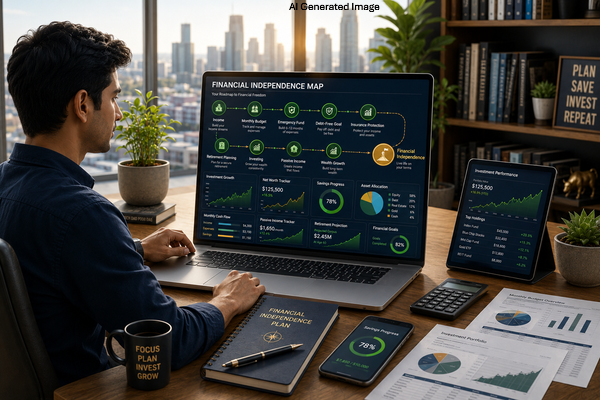
Picture two people who earn the exact same salary. One retires early and travels the world. The other is still stressed about EMIs at 55. What separates them is rarely luck. It is usually a plan.
Financial independence is not about hitting a magic number in your bank account. It is about reaching a point where your money works hard enough that you do not have to. And the good news is, you do not need a huge salary to get there. You need a roadmap, some patience and the discipline to follow through even when life gets messy.
Let us build that roadmap together.
Start By Knowing Where You Actually Stand
Most people avoid looking closely at their finances because it feels uncomfortable. But you cannot plan a route if you do not know your starting point.
Sit down and write out your monthly income, expenses, existing loans, insurance cover, and whatever savings or investments you already have. Include your PPF, EPF, mutual funds, fixed deposits, everything.
This is not about judging yourself for past money mistakes. It is simply about getting an honest snapshot so your next steps are based on reality, not guesswork.
Decide What Financial Independence Means For You
Financial independence looks different for everyone. For some, it means retiring at 45. For others, it simply means having enough passive income that a job becomes optional rather than compulsory.
This is the step most people skip, and it is the one that matters most. Without a personal definition, financial independence stays a vague wish instead of a working goal, and every SIP or investment you make ends up feeling disconnected from a real outcome. Some people want the freedom to switch to lower paying but more meaningful work. Others simply want the safety of never having to depend on a single paycheck again. There is no universal number here, only the number that matches the life you actually want to live.
Ask yourself a few honest questions. How much monthly income would make you feel secure without a salary? What kind of lifestyle do you actually want, not the one you feel pressured to want? These answers turn a vague dream into a concrete target you can plan around.
Build a Financial Foundation Before Chasing Growth
Before you get excited about investing, make sure your basics are covered.
Emergency fund. Salaried professionals should aim to keep three to six months of essential expenses set aside. If your income is irregular, such as freelance or business income, stretch that to six to twelve months.
Insurance first. Health insurance and term life insurance protect your family and your savings from being wiped out by one bad event. Skipping insurance to invest more aggressively is a common and costly mistake.
Clear high-interest debt. Credit card dues are the biggest threat here. Interest rates on unpaid credit card balances in India typically range between 30 percent and 48 percent per year, which is far higher than any return your investments are likely to earn. Clearing this debt should always come before chasing higher returns elsewhere.
Break the Journey Into Milestones
A twenty-year goal can feel impossible to start. Smaller milestones make it manageable.
In year one, focus on building your emergency fund and clearing costly debt. Over the next few years, increase your SIP contributions, build your EPF and PPF balance, and start working toward a home down payment if that is part of your plan. In the five to ten year stretch, look at creating a second income stream and steadily growing your investment portfolio. Long term, the goal is simple. Work because you want to, not because your bills demand it.
Let More Than One Income Stream Do the Work
Relying on a single paycheck is risky, no matter how stable that job feels today. Consider building a second stream through freelancing, dividend-paying investments, rental income or a small side business.
You do not need five income sources overnight. Even one reliable extra stream can meaningfully speed up your journey and give you breathing room during tough months.
Invest With Consistency, Not Guesswork
Keeping money in a savings account rarely beats inflation over time. Investing regularly through instruments like SIPs, ELSS, NPS and PPF allows your money to grow through compounding.
If you are under the new tax regime introduced from FY 2023-24, remember that popular deductions under sections 80C and 80D are not available by default, so factor that into your planning rather than assuming old benefits automatically apply.
What matters more than picking the perfect fund is showing up consistently. Automate your SIPs, review your portfolio once or twice a year, and avoid the temptation to time the market based on headlines.
Revisit Your Plan Regularly
Life does not stay the same, so your financial plan should not either. Marriage, a new job, buying a home or having children can all shift your priorities. Review your plan at least once or twice a year and adjust it as needed.
Mistakes That Quietly Delay Financial Independence
A Quick Financial Independence Checklist
If you want a simple way to track progress, run through this checklist every few months.
Have you built at least three months of expenses as a buffer? Is your health and life insurance in place? Are your SIPs running on autopilot instead of depending on your memory? Have you cleared your credit card dues in full each month? Are you reviewing your EPF, PPF and NPS contributions at least once a year?
If most of your answers are yes, you are already closer to financial independence than you probably realise. If not, pick just one item and fix it this month. Financial independence rarely arrives through one big move. It arrives through small, repeated actions that compound quietly in the background.
Final Thoughts
Financial independence is built one decision at a time. Earn steadily, spend with intention, build your safety net, clear expensive debt, invest consistently and protect what you have built with proper insurance.
There is no perfect day to start. Whether you are twenty five and just getting going or forty five and recalibrating, the roadmap toward financial independence works the same way. Build it, follow it, review it, and let time and consistency do the rest.
FAQs
What is a financial independence map?
A financial independence map is a personalized roadmap that outlines your current financial position, long-term goals, and the practical steps needed to achieve financial freedom.
How often should I update my financial independence map?
Review it at least once or twice a year, or whenever you experience a significant life or financial change.
Do I need a high income to become financially independent?
What should come first saving or investing?
Build an emergency fund and address high-interest debt before focusing heavily on long-term investing. Once that foundation is in place, invest consistently while continuing to save for shorter-term goals.
How can I stay motivated on a long financial journey?
Break your plan into achievable milestones, track your progress, celebrate small wins, and revisit your reasons for pursuing financial independence. Progress, not perfection, is what keeps momentum alive.